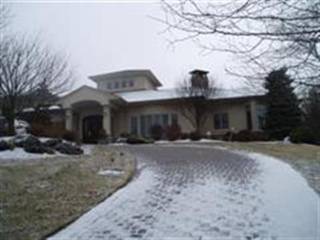
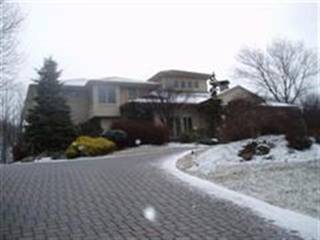
This is just an example of a home that All Pro inspected that was stated to be completely renovated.
Hard to believe but a professional Home Inspector can see things that are not apparent when buying a home
All Pro Home Inspections
|
|
Inspector: Ernest Borsellino |
|
Date of Inspection: December In the past |
ASHI Certified Member |
|
|
NJ Licensed Home Inspector GI 001570 |
|
Client: |
|
|
|
Reference Property: |
|
|
|
|
11 Wasanice Place |
100 Renovation Lane |
|
Couldhavebeen, CT |
Hopeful, NJ |
H O M E I N S P E C T I O N R E P O R T
Purpose of this Home Inspection Report:
To report the opinion of the inspector based on a visual inspection of the building. The inspector evaluated the building based on its “as is” condition, as of the date of inspection. Limitations and guidelines as established by the American Society of Home Inspectors were followed. Cosmetic items are not a concern of this report, but will be mentioned where appropriate.
Objective of this Home Inspection Report
To provide the client with a written report of the building, consisting of visual inspections of items listed in the ASHI Standards of Practice. If a particular problem was noted whereby no determination could be made as to the cause, the inspector and this report may recommend that a professional in that area of expertise be consulted. No opinion was made by the inspector of their own judgments about the value or location desirability.
Definition of the Home Inspection Report:
A visual examination and status report of the items listed in the ASHI Standards of Practice and the reporting of apparent defects (not cosmetic related problems) that require corrective action shall include, but no be limited to:
1. structure;
A load-bearing member of the building (including, footing, foundation walls, post, beams, floor joist, bearing walls, or roof framings) is reported defective if, upon visual inspection, it exhibited one or more of the following characteristics:
abnormal cracking or splitting,
unusual settlement,
deterioration such as rot, mold, fungus, or pest infestation damage,
improper alignment or structural integrity caused by modification or abuse; or
other characteristics that affect the building’s structural integrity.
While many defects will be clearly discernible by visual examination, this report may recommend further investigation by a specialist in the area of an observed or suspected defect.
2. unsafe or hazardous condition;
Any item that, upon visual inspection, was identified as a safety defect or a hazard, the presence or absence of which would be dangerous. The reporting of the possible presence of mold, asbestos, lead paint, UFFI, radon, electromagnetic radiation, toxic wastes, oil tanks and other indoor or outdoor pollutants, is outside the scope of this inspection.,
3. inoperative systems or appliances.
Any installed systems or built-in appliances that did not operate properly or perform there intended function in response to normal use. Proper operation means that the system was performing the basic function of functions for which it was designed and intended, based on the normal operation of the controls. Speculative comments about the future functioning of the system(s) are for information only and only immediate, observable conditions will be reported.
KEY COMMENTS |
|
This key comment page is provided to allow the reader a brief overview of the report. This page is not encompassing. Reading this page alone is not a substitute for reading the report in entirety. Additional explanation of the comments can be found and is encouraged to be read in the main text of this report. |
|
Items felt to be most significant by ALL PRO and/or the client. |
|
1 |
The report of the “EIFS” (Exterior Insulation and Finish System) installed on this home that was checked and evaluated by a specialist in this type of installation needs to be obtained. Water seepage has been found in numerous residences with EIFS-clad construction which can deteriorate the exterior sheathing. |
2 |
The rear right basement exterior door knob is broke preventing this door from opening. |
3 |
The missing screen for the exterior bedroom door to the rear balcony needs to be replaced. |
4 |
The front right kitchen counter top gas burner that does not auto ignite needs repair. |
5 |
The 2nd floor rear bedroom bathroom widow needs repair for proper operation. |
|
|
|
|
|
|
|
|
|
|
|
|
|
|
|
|
|
|
|
|
|
|
|
|
|
|
|
|
|
|
|
|
|
|
|
|
|
|
|
|
It is recommended that any deficiencies and the components/systems related to these deficiencies noted in the key comments and/or in the body of the report be evaluated, inspected and repaired as needed by licensed contractors/professionals PRIOR TO THE CLOSE OF ESCROW. |
|
EXTERIOR
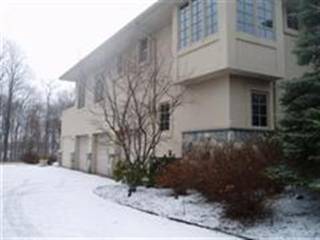
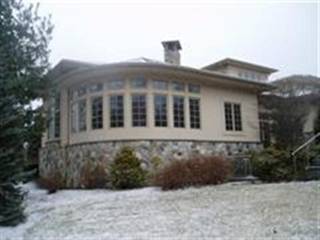
GROUNDS
WALKWAYS/STEPS
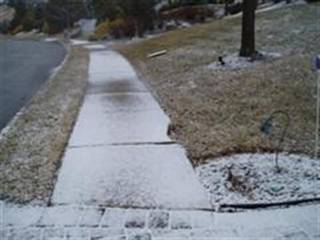
The city sidewalk is in serviceable condition.
The sidewalk may be on property owned by the town however its maintenance is usually the owner's responsibility. Cracks and heaving that may be a potential tripping hazard in the future should be corrected. If someone should trip or get hurt as a result of a cracked or uneven section, you may be vulnerable to a claim.
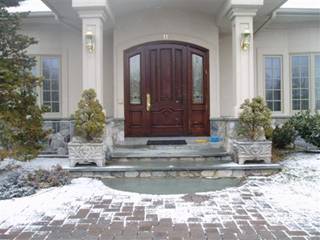
The front walkway to the main entrance is masonry and is in serviceable condition.
The front entrance steps are of masonry construction and appears to be structurally sound and in serviceable condition. All open areas where water can seep below the surface should be sealed. Water below the surface can freeze in the winter causing cracks to develop.
PATIO
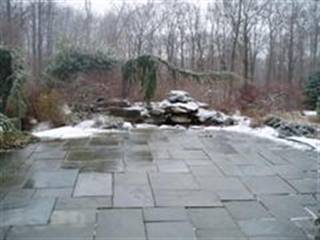 The rear slate patio is in acceptable condition. There are a few uneven pieces which appear to be insignificant at this time.
BALCONY
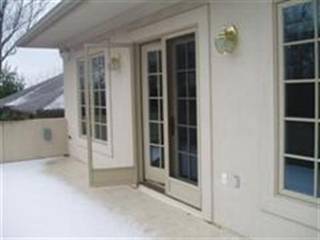 The rear balcony is basically sound structurally. The surface adequately finished and pitched away from the home for drainage as original intended during construction.
The missing screen for the exterior bedroom door to the rear balcony needs to be replaced.
DRIVEWAY
The paver driveway is in serviceable condition. The drainage is adequate away from the home.
GRADING
The grading around the perimeter of the home looks generally adequate to insure acceptable drainage.
Maintaining a positive slope away from the foundation walls will help minimize water accumulation around the building during a rainfall, and help insure a dryer interior. Under no circumstances should wooden portions of the structure be in contact with the ground. Grading in areas away from the building were not comprehensively evaluated in regard to drainage.
OIL TANKS
No testing was performed to locate any underground tanks, such as oil or chemical storage tanks, which might be present, or to determine their condition or legality. The homeowner and the township should be consulted in regard to this matter. A separate company should be hired to scan the property with a metal detector to determine if there are any underground tanks.
ROOF
The roof is composed of high quality asphalt shingles. A conventional roof of this type has an overall life expectancy in the range of 25-30 years, according to industry standards. This is only an approximation, as many roofs exceed this age, while others require earlier replacement.
Protrusions through the roof, such as plumbing vents, skylights, and exhaust ducts are made watertight by "flashings". These require periodic inspection and must be re-sealed occasionally to keep them watertight.
The roof and chimneys were inspected visually from the ground only. Binoculars were used and portions visible through the windows were evaluated during the interior inspection. These limited inspection methods are due to the inherent danger of climbing on roofs, and the damage which can result to some roofing materials. This type of inspection, together with the attic inspection, usually provides an assessment of the roof's condition; however, more details can obviously be obtained by a walk-on inspection. If further evaluation is desired or recommended by All Pro, a specialized roofing contractor should be contacted.
CHIMNEY
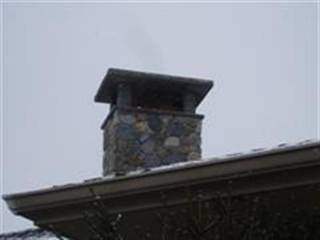 The visible portions of the masonry chimney, appears to be in generally sound condition. The chimney may require repairs to the concrete capping and mortar joints which are exposed to the weather as routine maintenance. The need for maintenance of this type is not apparent from the ground. Water seepage into the masonry will eventually cause deterioration to the flue lining and bricks.
The interior of the flues are not evaluated as part of a standard building inspection. Evaluation of these areas requires a specialized contractor. A slate cover is installed to keep rain out of the chimney.
FLASHING
The metal flashings that help keep the roof water tight are not visible for evaluation. These areas need to be inspected during heavy rainfall and sealed as required to remain watertight.
GUTTERS/LEADERS
The gutter drainage needs to be checked during rainfall. The purpose of a gutter system is to collect rain and snow from the roof and divert it to leaders away from the home. Debris should be removed to eliminate clogging and overflow. It is recommended that this be done at least twice each year.
The leaders are and should always be diverted away from the foundation walls to decrease the chance of water penetration through the foundations. Leaders that terminate by the foundation wall are one of the main reasons for water seepage into the basement. Debris should be flushed from underground drain pipes to the street and maintained.
SURFACES
SIDING
The report of the “EIFS” (Exterior Insulation and Finish System) installed on this home that was checked and evaluated by a specialist in this type of installation needs to be obtained. Water seepage has been found in numerous residences with EIFS-clad construction which can deteriorate the exterior sheathing.
FASCIAS/SOFFITS/TRIM
The fascias, soffits and trim on the home look to be in adequate condition. The wood for these items are covered in some areas and could not be checked.
Wood surfaces were only probed where accessible from the ground. The rest of the trim should be inspected and caulked and sealed as necessary during other routine maintenance to remain weather tight. Exterior trim components including those around windows and doors, as well as soffits and fascias, are prone to weathering and to openings at the seams and joints that are not evaluated during a home inspection.
DOORS
The entrance door is in operable condition. The hardware is in proper working order. The rear door is operable and in adequate condition. The hardware is in working order.
The rear right basement exterior door knob is broke preventing this door from opening.
WINDOWS
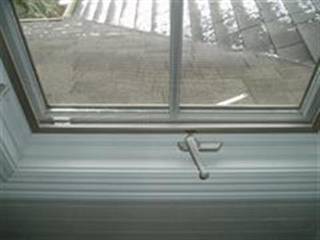 The 2nd floor rear bedroom bathroom widow needs repair for proper operation.
The rest of the windows have a generally adequate appearance for their age. Only those windows easily accessible for operation were operated. All windows should be operable for exit in case of fire. Some are missing screens. An audit of the screens was not conducted.
GARAGE
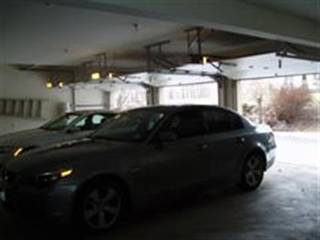
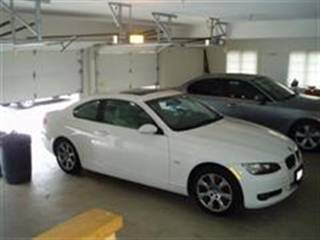
The walls are in overall adequate condition. The floor is serviceable. The garage doors are functional.
The automatic door openers were operated, and appeared to function in an acceptable manner. A safety device is provided to stop the door from closing if an item is in the way. An inventory of the transmitters was not conducted and should be obtained prior to closing if available.
I N T E R I O R
Carpeting was not lifted to evaluate the condition of the flooring
Furniture was not moved to evaluate outlets and wall conditions.
Cosmetic items in regard to walls, floors and ceilings finish condition are not reported
BASEMENT
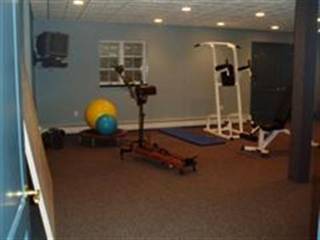
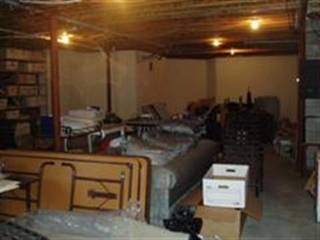
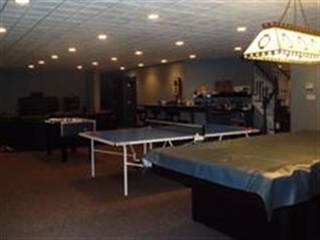
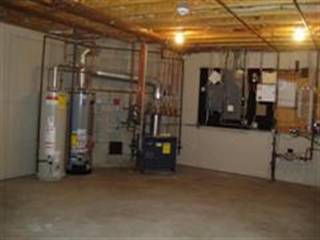
The foundation walls of the basement could not be comprehensively inspected due to the finished surfaces that have been installed concealing the masonry surface. Mold, signs of water seepage or cracks may be concealed behind the finished surfaces preventing an evaluation of these conditions. The condition of the basement wall structure is excluded from this inspection and report. Finished basement walls can trap moisture behind the surface and promote mold growth. We cannot provide you with an opinion as to the extent of mold that may exist behind finished surfaces or how it should be corrected is mold exist. These conditions can cause health problems and be difficult to correct. A company specializing in mold remediation needs to be consulted. All Pro does not test for mold or the air quality within a home to determine the amount of fungus, mold or mildew that may exist.
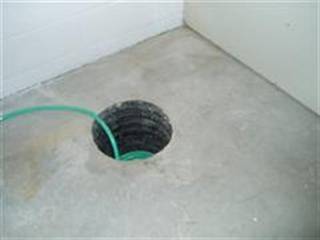 There is a sump pit in the basement for future use of a sump pump is required.
At the time of inspection no water penetration was observed. A prediction in regard to the amount of water penetration that may occur is impossible to determine. It is highly recommended that you contact the present occupants to provide further information concerning any previous incidents of water penetration. It is necessary to occupy a building through the wet seasons prior to assuming that it will be completely dry.
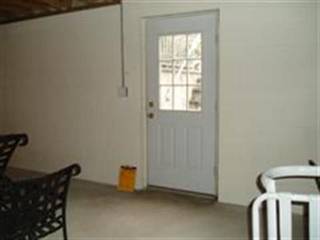
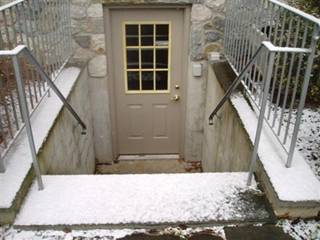
The rear right basement exterior door knob is broke preventing this door from opening.
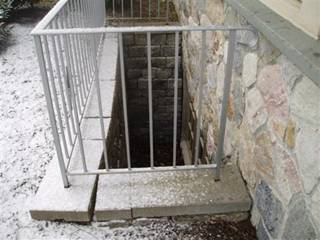
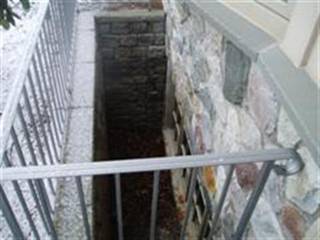
The dry laid walls for the basement widows wells are starting to lean. As with any movement in a home monitoring will be required over time to determine what if any action will be required.
GIRDERS/COLUMNS
The girders (which are the main support beams) are all covered and could not be evaluated. The columns which support the main girders appear to be in adequate and sound condition.
JOIST/SILL PLATES
The joist and sill plates are all covered and could not be evaluated.
LIVING ROOM
The living room is in adequate condition. The walls and ceiling appear to be structurally sound. The floor appears to be serviceable.
DINING ROOM
The dining room is in adequate condition. The walls and ceiling appear to be structurally sound. The floor appears to be serviceable.
FAMILY ROOM
The family room is in adequate condition. The walls and ceiling appear to be structurally sound. The floor appears to be serviceable.
FIREPLACE
The fireplace is in overall adequate condition. The firebox and the flue look sound where visible. The damper is operable. These installations are not operated to evaluate their performance during an inspection and no determination could be made as to how well they will draft during operation. Flues should be professionally cleaned on a regular schedule based on the frequency of use.
ENTRANCES/HALLWAYS
ENTRANCES
The front entrance area is in adequate condition. The exterior and interior light fixtures are operable.
The rear entrances are also in adequate condition. The exterior lights are operable.
HALLWAY
The hallway is in overall adequate condition. The walls and ceiling appear to be structurally sound. The floor is serviceable.
Smoke detectors and carbon monoxide detectors are not inventoried or evaluated during a standard inspection. They are required safety devices and working units should be maintained at the appropriate locations on each level of the home. They should be tested regularly and batteries replaced as required. It is suggested that you check with local fire code officials with regard to any regulations concerning devices of this type.
STAIRS
The stairs appear to be in sound condition. The banister appears to be adequately secured.
BEDROOMS
The bedrooms are in useable condition. The walls and ceilings look to be in adequate condition. Entrance and closet doors are functional. The floors are in adequate condition.
ATTIC
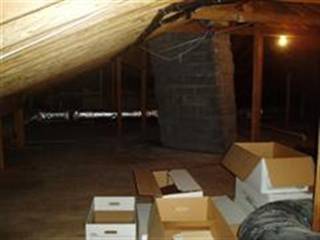
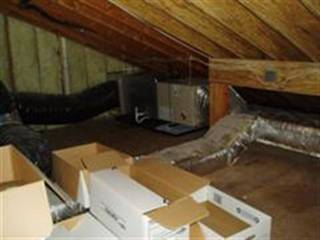
The unfinished attic areas where visible are thought to be generally adequate. The rafters, joists and sheathing are in sound overall condition.
Ventilation in an attic is very important. It allows moisture that accumulates in this area to dissipate and also helps to reduce the heat buildup that normally develops during the summer months. If the area is inadequately ventilated, this moisture can eventually cause problems such as delaminating roof sheathing.
The wall voids are inaccessible and the amount and type of wall insulation, if any, could not be determined. Present recommended energy efficiency standards call for at least nine inches of insulation above the ceiling. Almost any building, however, will benefit from additional insulation, or other energy saving measures which can result in greater comfort and in reduced utility costs. It is suggested that you consult your utility company or an insulation contractor to determine which energy saving improvements may benefit this building.
It is very difficult to determine if there is any water penetration during dry weather. Previous water penetration leaves visible stains which do not indicate present leakage but need to be monitored during rainfall. Water penetration through the roof or flashings is dependent on both the weather on the date of inspection and seasonal conditions.
S Y S T E M S
ELECTRICAL
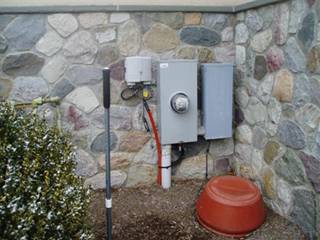 The electrical service provided to the building by underground wires, are securely fastened to the house and there are no noticeable frayed sections. In most communities, this inlet service wire (from the house attachment to the electrical meter) is the responsibility of the homeowner, not the utility company.
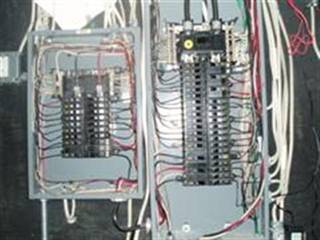 The main service disconnect has a capacity of 200 amperes, 240/120 volt electric service. The main ground where visible appears to be adequately secure. Overcurrent protection is provided by circuit breakers located in a service panel in the basement and a sub panel in the attic..
The panel was opened, and branch circuit wiring was found to be copper cable and appears to be in adequate condition.
Only a representative number of outlets, fixtures, and switches were operated. Furniture was not moved to evaluate the amount of outlets per room or condition of the inaccessible outlets.
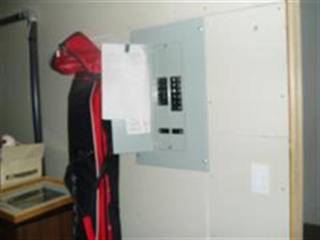 The GFCI outlets that were tested functioned properly. Ground Fault Circuit Interrupter (GFCI) electrical outlets and breakers are a significant safety improvement and are required in new homes for bathrooms, kitchen counter top outlets, garages, crawlspaces, unfinished basements, outside outlets, swimming pools, etc.. They should be installed in older homes as well to reduce potential electrical hazards in wet areas.
HEATING
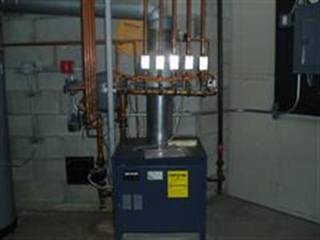 Heat is provided by a 5 zone gas-fired, hot water boiler. The unit was operated, and appears to be in adequate condition. The burner ignited and operated quietly. The system appeared to be in leak free condition at the time of the inspection. The flue pipe appeared to be in satisfactory condition, with adequate clearance to combustibles. The sealant around the flue transition piece should always be well caulked. Draft at the unit appeared to be adequate. Operating and safety controls were installed and each room is heated. The forced circulation system functioned in a leak free manner. A boiler of this type usually has a life expectancy in the neighborhood of 20 to 30 years prior to the need for replacement.
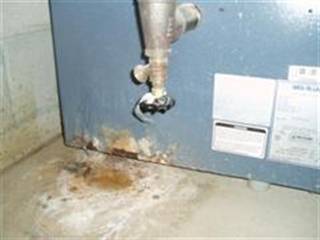
There is some rust at the bottom of the boiler from previously leaking valve that is no longer leaking.
The heating unit was operated only for a short period of time during the inspection. During a single inspection it is impossible to determine how adequately this heating system will heat this home.
Internal access in a boiler is very limited and this evaluation is based on external visual inspection only. Automatic safety controls were not operated or evaluated, no components were disassembled, and only unsecured access panels were opened.
CENTRAL AIR CONDITIONING
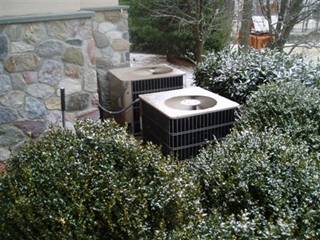 This home also features two central air conditioning systems. These units could not be fully evaluated at this time due to low temperature conditions. It is recommended that the units be checked before taking possession of the home if at all possible.
The 1999 condenser units located outside the home was inspected externally. Units of this type have an average life expectancy of approximately 15 years.
PLUMBING
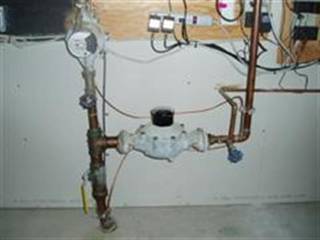
Water appears to be provided by a municipal source. The main water line to the house from the street shutoff valve to the water meter is copper and in serviceable condition.
The copper water distribution lines appear to be in generally leak free condition. Water pressure is thought to be basically adequate and functional flow was noted where evaluated.
The sewer line from the street to the home can not be checked. This requires the use of a video camera which is not part of a home inspection evaluation. The interior visible sections of the sewer lines look adequately sloped to provide proper drainage. Vents are noted through the roof to help facilitate water flow in these drain lines.
Most of the piping in the home is concealed inside walls and ceilings and could not be visually inspected. Shut off valves other than the fixtures themselves were not operated because they are operated infrequently and often leak after use.
Laundry appliances are not evaluated within the scope of a home inspection.
WATER HEATER
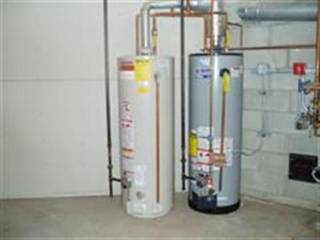
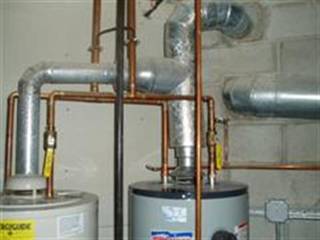
Hot water is provided by a two 50 gallon, gas-fired unit. One is a 1998 and the other is a 2008. Units of this type have a normal life expectancy of 5-10 years. The exhaust system appears to be a proper installation. A relief valve is installed on this unit to protect against high temperature and pressure. The discharge pipe on the relief valve should always be diverted just above the floor for safety. The piping installation appears to be in adequate condition. No indication of leakage was observed.
KITCHEN
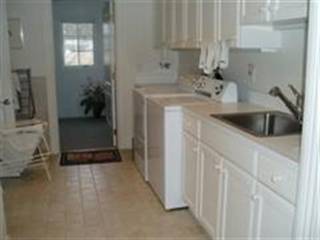
The walls and ceiling are in adequate condition. The floor surface has an overall serviceable appearance. The cabinets and counter tops look basically functional. The faucet, sink and drain line appear to be in generally leak free condition.
DISHWASHER
The dishwasher was placed through a short cycle and functioned without any visible leaks.
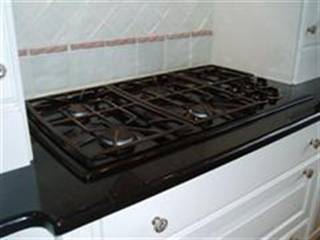 The front right kitchen counter top gas burner that does not auto ignite needs repair.
The oven and other burners were functional. The other major appliances operated, and appeared to be functional.
Only the built-in appliances are regularly evaluated as part of an All Pro inspection. This does not include the refrigerator. Based on these limitations, All Pro cannot provide any warranties beyond those issued by the manufacturer and cannot predict the useful life of the appliances. It is recommended that you obtain the manufacturer's informational booklets and warranties, if available.
BATHROOM(S)
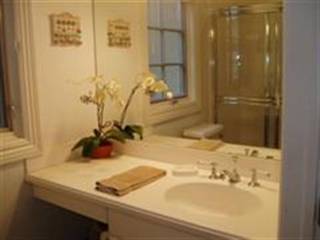
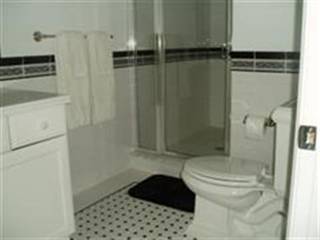
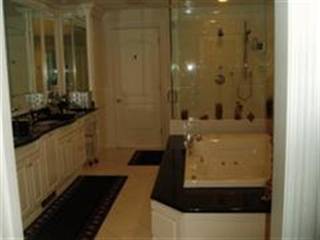
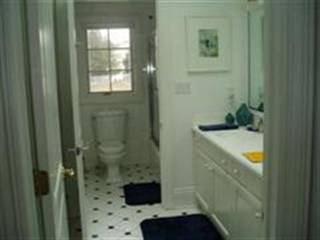
The bathrooms are in overall adequate condition. The floor and walls outside the bathtub enclosures appear to be in acceptable condition. The tubs and enclosure surfaces appear to be in adequate condition. Surfaces subjected to wet conditions should be well caulked, grouted and sealed as necessary to maintain them in a waterproof condition. This is important maintenance and will help to prevent leaks and deterioration of the materials behind these surfaces.
The fixtures are operable and appear to be in leak-free condition. The toilets are adequately secured and function satisfactorily. The lights and receptacles are functional. Water temperature and pressure is felt to be adequate.
The water in the shower stalls was run for quite a few minutes and no leakage was observed as evidence by any visible water stains on the surfaces below. A metal pan is normally installed below the tile floor. This eventually corrodes and can develop leaks if not maintained, however, it is apparently in leak-free condition at this time.
Please use the enclosed "Preclosing Inspection Checklist" to assist you at your final inspection prior to taking possession of the property. Compare the condition of the building to the described condition in this report and please contact us if you notice any discrepancies. Remember, however, that certain aspects may have changed subsequent to the inspection and could be different than noted in this report.
WALK THROUGH INSPECTION CHECKLIST
Use this handy checklist for your own inspection shortly before closing.
__ Review your Home Inspection Report.
__ Check for any obviously different or changed conditions, i.e. vandalism, or natural disaster, fire, etc.
__ Be sure that the house and yard are cleaned up, and that all items not included in the sale have been removed. Interior of the home should be "broom clean".
__ Walk through all rooms. Inspect walls, ceilings, and floors for any fresh water stains or some damage.
__ Inventory storms and screens to be sure all are available and in good condition.
__ Turn on furnace or boiler, be sure it starts quietly and appears to operate satisfactorily. Check furnace filters and operate humidifiers and electronic air cleaners.
__ Turn on air conditioner, be sure cool air is provided at ducts. Look at compressor (outdoor unit) and be sure it activates. Only operate air conditioner when outside temperature is at least 65 degrees.
__ Operate all kitchen appliances. Be sure they appear to operate adequately.
__ Be sure all special equipment and appliances included in the sale are still on-site.
__ Inspect attic for evidence of any water stains, leaks, and condensate.
__ Check basement for water stains or penetration. Manually activate sump pump, if applicable. Locate and mark the shut offs for the heating, electrical and plumbing.
__ Operate all bathroom fixtures. Activate GFCI outlets using he test button. Check for unusual conditions and leaks, adequate hot water temperature and drainage.
__ Turn on lights, including outdoor fixtures. Light fixtures, outlets, switches and junction boxes should be provided with cover plates as necessary, to ensure safety.
__ Obtain transmitters for garage door openers.
If anything is not adequate or acceptable, other than those conditions which were discussed in our report, we urge you to contact us for further information or assistance prior taking possession.
End of report.